Hyper-Efficiency: How 2026 Trends are Reshaping Wholesale Pastry Delivery
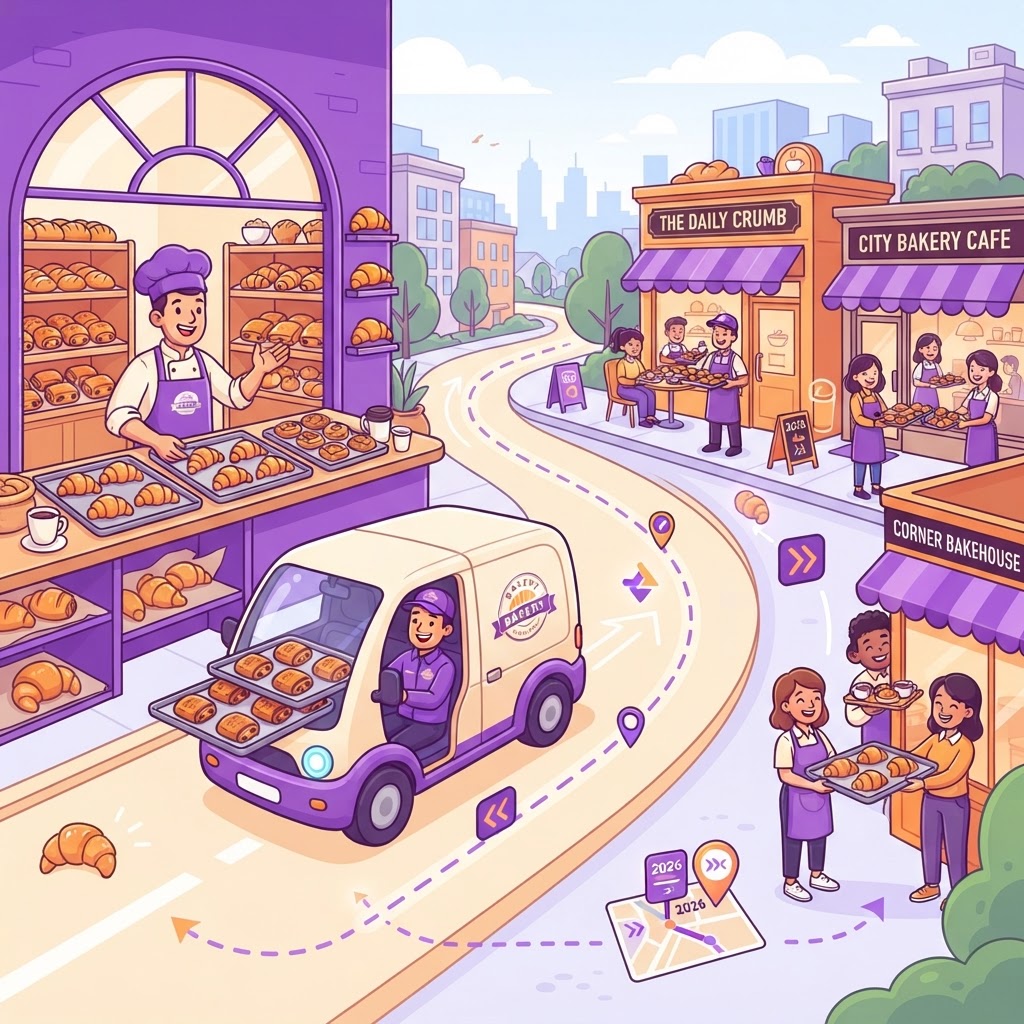
In 2026, the wholesale bakery sector is moving away from the 'static route' mentality of the previous decade. As profit margins tighten and urban traffic patterns shift, bakeries are no longer just baking goods; they are evolving into high-tech logistics providers. The integration of predictive AI and autonomous infrastructure is turning delivery routes from a cost center into a competitive advantage for those supplying the booming cafe market.
Real-Time
Dynamic Replenishment The most significant shift in 2026 is the death of the fixed daily order schedule. Modern cafe owners now utilize 'Just-in-Time' inventory systems that sync directly with bakery production software. By utilizing automated stock scanning, bakeries can predict exactly how many croissants or danishes a cafe will need before the cafe even places the order.
This reduces the 'stale-back' rate—the inventory returned to the bakery at the end of the day—by nearly 40%. It ensures that production is always matched to actual demand rather than historical guesswork.
Autonomous
Last-Mile Micro-Fleets While large trucks were the standard for regional supply, 2026 has seen a surge in 'micro-fleets' utilizing electric cargo bikes and small-scale autonomous delivery pods. These vehicles are ideal for navigating dense city centers where parking is scarce and congestion pricing is high.
-
Lower operational overhead per delivery.
-
Increased ability to utilize bike lanes, bypassing traditional traffic jams.
-
Reduced carbon footprint, which serves as a major marketing hook for eco-conscious cafe partners. Bakeries are now treating their delivery fleets like a jigsaw puzzle, using larger trucks to reach outer hubs and deploying smaller, nimble vehicles for the final five blocks of the journey.
The
Rise of 'Dark' Distribution Hubs In order to keep pastries fresh and delivery times short, bakeries are increasingly moving away from central-only distribution. Instead, they are utilizing 'dark hub' facilities—small, refrigerated storage units strategically placed across urban zones. Instead of one long route starting from the bakery at 3:00 AM, the product is transported in bulk to a hub overnight.
From there, local delivery teams take shorter, more frequent trips to fulfill cafe orders. This strategy:
-
Maintains optimal pastry temperature and texture.
-
Allows for 'mid-morning' top-ups for cafes that experience unexpected rushes.
-
Significantly reduces the physical strain on drivers.
Integration as the
Competitive Moat The bakeries thriving in 2026 are those that have eliminated the 'silo' effect between the oven and the road. If the production schedule isn't talking to the GPS, the bakery is losing money. Integrating bakery management systems with route optimization software is no longer optional; it is the baseline for survival.
When a delay occurs on the road, the system automatically recalculates the route and sends a push notification to the cafe owner. This transparency replaces frustration with trust, cementing the relationship between the bakery and the coffee shop.
Strategic
Takeaways The landscape of 2026 is unforgiving to inefficiency. To remain competitive, wholesale bakeries should prioritize:
-
Data-driven production: Shift toward demand-predictive ordering to minimize food waste.
-
Agile Fleets: Invest in smaller, electric transport solutions that can navigate modern city regulations.
Transparency Tech: Implement software that bridges the gap between the production line and the cafe’s door. By embracing these shifts, bakeries can move beyond simple logistics and provide a level of reliability that makes them an indispensable partner in the cafe’s daily success.