Mastering Perishability: Smart Strategies for Bakery Stock Replenishment
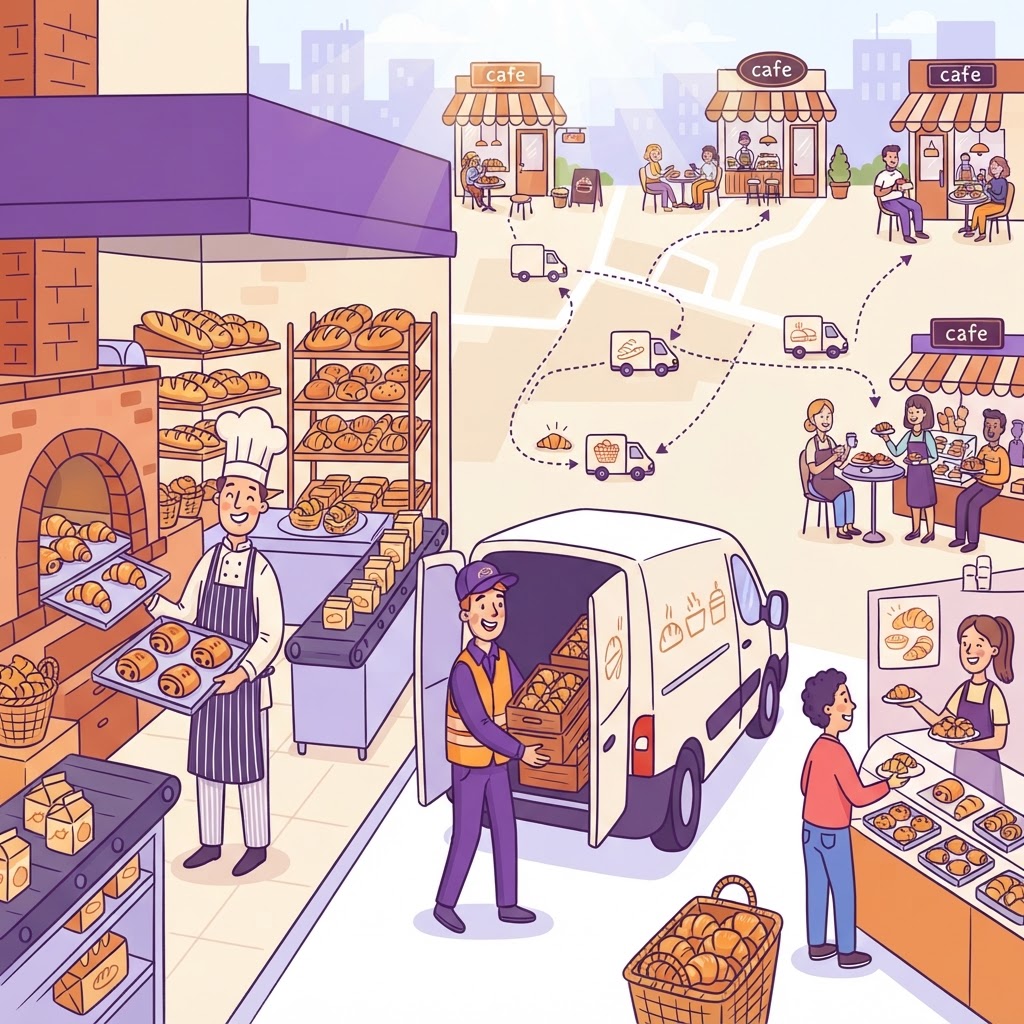
For wholesale bakeries, the intersection of rapid perishability and unpredictable daily demand is the most significant challenge to profitability. Unlike dry goods or frozen inventory, fresh pastries have a narrow window of peak quality, often lasting less than 24 hours. When this margin is mismanaged, profit is literally thrown in the bin as waste.
Effective replenishment strategies require a shift from reactive baking to predictive, data-informed production and distribution.
The
Peril of Over-Production and Under-Stocking The traditional approach of 'baking to capacity' rarely aligns with the fluctuating demand of modern cafes. Over-production leads to direct financial loss through waste and the hidden costs of disposal and labor. Conversely, under-stocking leads to stockouts, which frustrate cafe owners and drive them toward competitors who offer more reliable replenishment.
To strike the right balance, bakeries must leverage historical order patterns. Instead of treating every Tuesday as identical, production managers should analyze data to identify seasonal dips, weekend surges, and event-based demand spikes. By moving from a fixed production schedule to one that adjusts daily based on rolling averages and localized demand signals, you can align supply with actual consumption.
Leveraging
Just-in-Time (JIT) Principles in Bakery Logistics Just-in-Time delivery is the gold standard for fresh goods, but it requires seamless coordination between production and delivery logistics. The goal is to minimize the time between an item leaving the oven and arriving at the cafe. This requires a shift in how you view the production cycle.
Instead of finishing all baking by 3:00 AM, consider staggered production shifts that coincide with delivery route scheduling. By grouping clients by geographic location and aligning their order cut-off times with the optimal route departure windows, you ensure that the freshest items are always the first to be loaded and the first to arrive. This reduces inventory hold time and ensures product consistency.
Utilizing
Automated Forecasting Tools Digital platforms like PastryScan are designed to solve the complexity of manual replenishment. These tools aggregate ordering history across your entire client base to predict exactly what is needed for tomorrow's routes. Rather than relying on gut feelings, production managers can use these reports to generate precise bake lists.
Automation also helps in identifying 'slow movers'—products that might have high waste rates across the board—allowing you to refine your product mix. Furthermore, these systems can provide real-time updates to delivery schedulers, ensuring that if a last-minute adjustment is made to an order, the production floor is notified immediately to prevent unnecessary waste.
Strategies for
Reducing Waste Through Client Collaboration Your biggest allies in waste reduction are the cafes you supply. Often, waste occurs because cafes over-order to ensure they never run out, leading to unsold stock on their end. Open a dialogue with your high-volume clients regarding their own waste patterns.
Consider implementing 'dynamic inventory management' where you offer suggestions on order adjustments based on their sales data. When you partner with clients to optimize their order levels, you create a more efficient supply chain that benefits both parties. You aren't just a supplier; you become a strategic partner in their profitability.
Key
Takeaways for Your Daily Operations To successfully manage perishability, shift your focus from volume to precision.
-
Use historical data to forecast daily demand instead of relying on static production schedules.
-
Stagger production to align with your most efficient delivery routes to minimize hold times.
Adopt digital tools to automate forecasting and minimize human error in order processing. 4. Communicate with your cafe partners to align their ordering with real-world sales rather than defensive over-ordering.
By implementing these data-driven strategies, you can minimize waste, improve the quality of the product that reaches the customer, and significantly increase your bakery’s margins.