Predictive Baking: Mastering Seasonal and Weekly Demand Forecasting
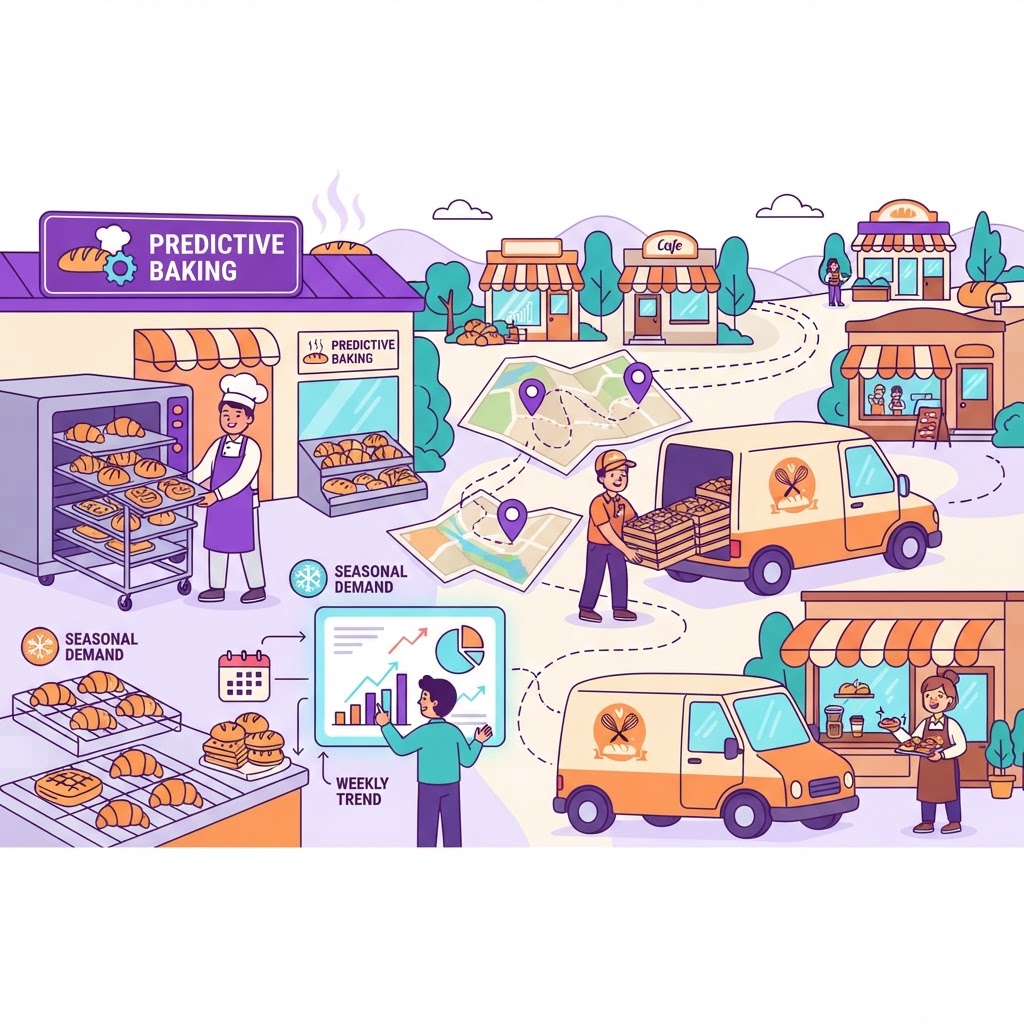
For wholesale bakeries, the cost of guessing demand is high—either in the form of wasted inventory or missed revenue from stockouts. Moving from reactive baking to proactive production requires a shift toward data-driven forecasting that accounts for both the recurring weekly cycle and the broader seasonal variations of the cafe industry. By identifying the unique rhythm of your client base, you can optimize your oven schedules and resource allocation with surgical precision.
Deciphering the
Weekly Rhythm Every wholesale bakery has a distinct weekly pulse. While weekends often see a spike in demand for indulgent treats like almond croissants and danishes, weekdays usually lean toward staple items like butter croissants and savory morning pastries. Analyzing your historical orders by day of week reveals the true baseline for each client.
Start by categorizing your products into two streams: 'Staples' and 'Specialty'. Staples exhibit consistent volume, whereas specialty items are highly sensitive to the day of the week. Tracking these trends through PastryScan allows you to identify specific patterns, such as the Tuesday slump or the Friday surge, enabling you to adjust your dough production accordingly.
Managing the
Seasonal Flux Seasons act as a macro-multiplier for your daily demand. Temperature, holidays, and regional tourism patterns exert significant pressure on the output of your cafe partners. During the transition from winter to spring, for instance, you might see a sharp increase in demand for lighter, fruit-forward pastries, whereas colder months often demand richer, chocolate-infused products.
To manage this transition effectively, maintain a 24-month rolling forecast. Comparing year-over-year data helps you anticipate these shifts before they manifest in your order book. Consider these factors when building your seasonal plan:
-
Weather Correlations: Track which products sell better during heatwaves versus cold fronts.
-
School Holidays: Factor in the regional academic calendar, which can dramatically lower cafe traffic in business districts.
-
Local Events: Maintain a calendar of local festivals or sporting events that might cause unexpected spikes in local cafe traffic.
Aligning
Production with Procurement Forecasting is not just about the oven; it is about the entire supply chain. When you can predict demand with a high degree of confidence, your procurement team can order raw ingredients in bulk, reducing the cost of goods sold. Furthermore, it allows your delivery team to optimize routes based on volume, ensuring your transport fleet is not idling with half-empty vans.
Effective communication with your cafe partners is essential here. By sharing your forecasts with them, you can help them understand why certain ordering deadlines exist. When a cafe sees that their consistent ordering habits lead to higher fulfillment rates and fewer errors, they are more likely to participate in your replenishment programs.
Practical
Steps for Implementation Translating data into daily practice requires a disciplined approach to your production schedule. Start by auditing your last six months of order history, specifically looking for anomalies where stock ran out or surplus was thrown away. Treat these anomalies as the primary areas for improvement in your forecasting model.
- Segment your customers: Group cafes by volume and location to see if specific demographics exhibit different consumption habits.
Utilize automated alerts: Use PastryScan to trigger reminders when a client's order deviates significantly from their historical average. 3. Review and iterate: Schedule a bi-weekly meeting with your head baker and lead scheduler to review the forecast versus actual performance.
- Incorporate lead times: Ensure your forecasting timeline matches the lead time required for raw material procurement, particularly for long-fermentation doughs.
The
Takeaway The goal of forecasting is to transform your bakery from a source of high-waste variable output into a consistent, reliable engine of supply. By focusing on the interplay between weekly consumption cycles and seasonal trends, you reduce the operational friction that plagues many wholesale bakeries. Use the data you have to bake exactly what is needed, and let the efficiency gains drive your business forward.