Shrinking the Surplus: Strategic Approaches to Precision Pastry Ordering
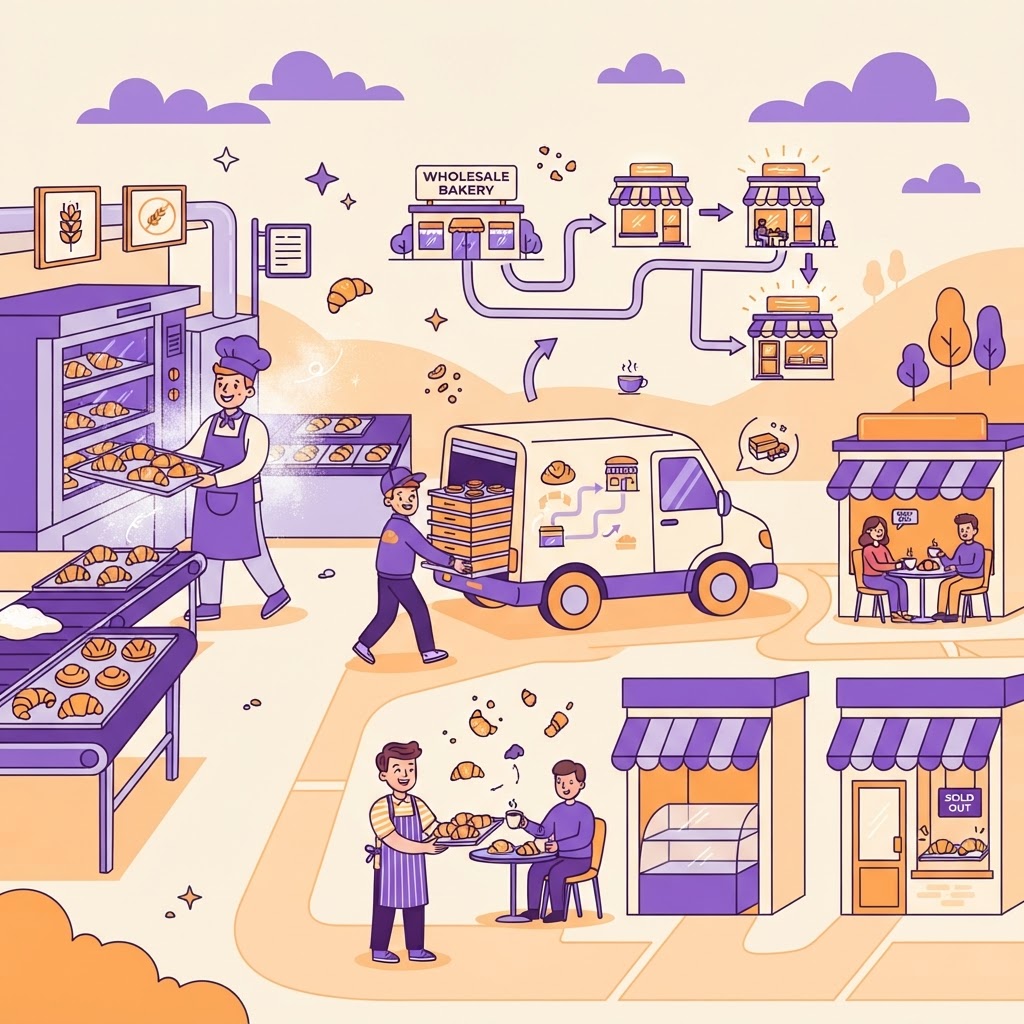
For wholesale bakeries, the daily cycle of production and delivery is a tightrope walk. Over-produce, and you are left with trays of unsold goods that shrink your profit margins; under-produce, and you risk losing the trust of your cafe partners. Achieving the goldilocks zone of inventory is the single most effective way to improve your bottom line and sustainability credentials simultaneously.
While traditional forecasting relied heavily on intuition and 'gut feeling,' modern production environments require a shift toward data-backed, intelligent ordering systems.
The
Hidden Cost of the 'Just in Case' Mentality
Many production managers fall into the trap of over-ordering raw ingredients and finalizing production schedules based on an 'always have more' mindset. While this mitigates the risk of short-shipping a client, the cumulative cost of waste—not just in lost ingredients, but in wasted labor, energy for ovens, and delivery logistics—is astronomical. By analyzing your historical order patterns, you can identify exactly which products see consistent demand and which fluctuate wildly based on the day of the week or local events.
Leveraging
Daily Order Patterns
Not every cafe orders the same volume every day. Mondays often look different from Saturdays, and weather patterns or local holidays play a significant role in customer foot traffic. Using a platform like PastryScan allows you to centralize these variables.
When you digitize your ordering process, you gain access to:
- Trend analysis: Identifying which cafes have slow Tuesday mornings vs. busy weekend rushes.
- Automated thresholds: Setting minimum and maximum order levels based on actual historical movement.
- Real-time feedback: Getting alerts if an order falls outside of normal purchasing parameters.
Improving
Communication with Cafe Partners
Waste often occurs due to a lack of communication. If a cafe experiences a slow week but continues to order their standard quantity, they are essentially pushing their waste issue onto your balance sheet. Encouraging cafes to use a streamlined ordering portal ensures that they are prompted to update their numbers daily rather than relying on stale standing orders.
When ordering is frictionless and automated, cafes are much more likely to provide accurate data, which directly benefits your production planning.
Integrating
Logistics into Production Planning
Production isn't just about what to bake, but how to pack it efficiently for the delivery driver. Smart replenishment tools should sync directly with your route optimization software. When you produce only what is required for the optimized daily routes, you reduce the 'buffer' space in delivery vans and streamline the loading process.
This reduces the time spent on loading docks and minimizes the likelihood of mislabeled or incorrect batches reaching the wrong destination.
The
Role of Production Flexibility
Even with the best data, the 'last-minute' request or the unexpected cancellation will occur. The goal is not to eliminate uncertainty entirely, but to minimize its impact. By maintaining a modular production schedule, you can adjust final quantities closer to the baking window.
Using real-time data from a platform like PastryScan allows you to see the aggregate demand as it builds throughout the evening, giving you the visibility to adjust prep sheets before the mixers start in the early hours of the morning.
Key
Takeaways for Immediate Implementation
- Audit your 'waste logs' for the last 30 days to identify the top three products that consistently end up as losses.
- Transition your cafe clients away from 'indefinite' standing orders toward a weekly review system.
- Implement a digital ordering portal to capture data consistently rather than relying on phone calls or fragmented emails.
- Use the insights gained from order history to forecast ingredient inventory, ensuring you are not over-purchasing base materials like flour and butter.
Ultimately, reducing waste is about visibility. When you trade intuition for intelligence, you stop guessing and start scaling. By optimizing the link between cafe demand and your bakery's output, you are not just saving on costs—you are creating a more resilient and professional operation.